✦ RPG Resource
The Best Treasure in the Chest Is a Question
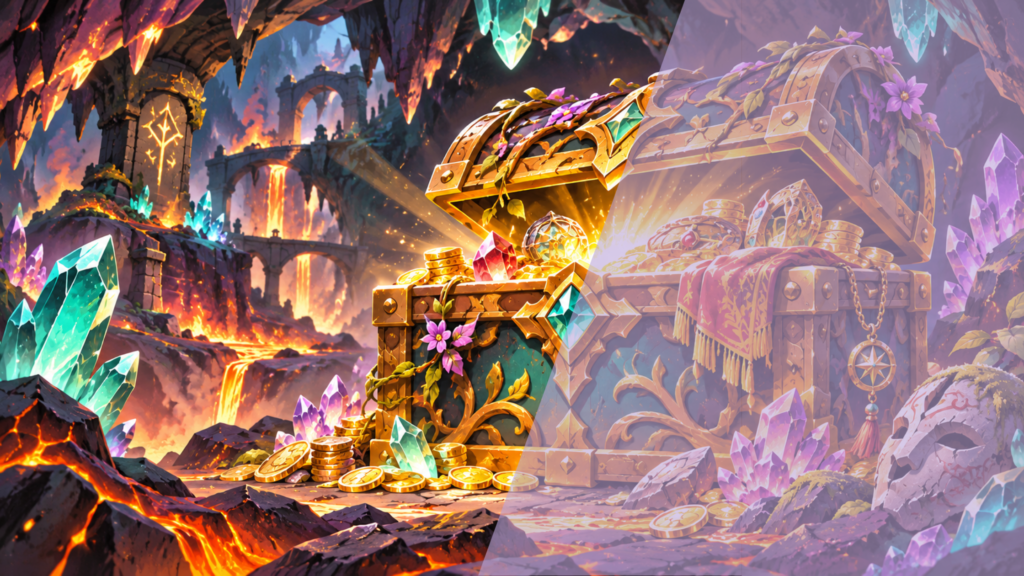
The chest opens with a reluctant creak. Inside are three silver coins, a cracked drinking cup, and a child’s wooden horse.
The horse is not valuable. Its paint has worn away. One leg has been repaired with a copper pin. But the ranger recognizes it immediately. Their grandmother made the same repair on a toy that disappeared before they were born.
Suddenly the best treasure in the room is not something anyone can sell.
A piece of loot is worth remembering when it changes somebody’s understanding of the world. Family history gives you plenty to work with, but it’s also easy to mishandle. Let the letter explain the whole secret, have the villain confirm it, and you’ve turned the table into an audience.
I prefer to start with an object that’s slightly wrong, let the players decide what it means, and make sure there is more than one path to the truth. You need less backstory than you think. You do need restraint.
STEP ONE: CHOOSE THE RELATIONSHIP AT STAKE
Before choosing the treasure, work out whose relationship it unsettles. A parent? A mentor? A grandparent with a reputation that still follows the family? What does someone believe about that person now, and why would it hurt to reconsider it?
A knight who thinks her grandfather abandoned a mountain outpost has built much of her life around redeeming his name. That’s fertile ground. Finding out he was secretly flawless would flatten it. Finding evidence that he broke an order for a reason, and that people paid a price either way, is harder to dismiss.
One caution matters more than any clever reveal: don’t rewrite a player character’s family history without talking to the player. Some people love that kind of surprise; others don’t. If you’re uncertain, put the secret in an NPC’s family and let the entire group choose how involved they want to become.
STEP TWO: GIVE THE TREASURE A CONTRADICTION
The object needs one detail that refuses to fit the official account. A medal dated after its owner supposedly died. A drawing of a building that hadn’t been built yet. Two rival signatures on the same map. You don’t need three twists. One stubborn contradiction is enough.
In the ruined watchtower, the party finds a brass compass marked with the grandfather’s initials. Inside the lid is a miniature portrait of the enemy commander, painted with more tenderness than anyone expected. The compass points north just fine. The strange thing is the portrait. Who kept it, and why?
Resist answering that question immediately. They might have been lovers, siblings, allies, or strangers connected by something uglier. The portrait could even have been planted. A clue is stronger when it makes players talk to each other before they talk to the GM.
STEP THREE: REVEAL INFORMATION IN LAYERS
Think of the reveals as three changes in understanding, not three mandatory stops. First the portrait raises a question. Then a ledger shows the grandfather supplied medicine to civilians on both sides. Finally a surviving witness identifies the commander as his estranged sister. The story hasn’t simply reversed. It has acquired people and consequences.
For the compass, layer one is the portrait. Layer two is a supply ledger showing the grandfather secretly delivered medicine to civilians on both sides of the mountain. Layer three is a surviving witness who reveals the commander was the grandfather’s estranged sister. The family publicly called his mercy treachery because admitting the war’s cruelty would have threatened powerful people.
Do not insist the clues arrive in the order you wrote them. If the party misses the ledger, the witness can describe the deliveries. If they distrust the witness, a date on a memorial may confirm part of the account. Give the essential fact more than one route into the room. Otherwise your beautiful mystery may die because nobody searched the right drawer.
STEP FOUR: MAKE THE OBJECT USEFUL WITHOUT MAKING IT MANDATORY
Let the compass be a compass. It doesn’t need to grant advantage, whisper prophecies, or open a portal. Its value is what someone hid inside it. If your players enjoy mechanical rewards, put a useful item beside it. There’s no need to make the story clue compete with the loot.
If your game rewards mechanical treasure, pair the clue with a modest useful item elsewhere in the cache. That way players who enjoy equipment still get something satisfying, while the mystery retains its own value.
I’d never lock the only meaningful clue behind one check. A roll can reveal that the portrait was painted years after the compass was made, or identify the metalworker. The party should be able to see the portrait because they opened the lid. Curiosity starts the story; skill checks make it richer.
STEP FIVE: OFFER A CHOICE, NOT A VERDICT
The reveal should change a choice, not deliver a final verdict. Does the knight tell the village? Visit the commander’s descendants? Speak privately with her own family first? Leave the object where she found it? Each choice costs something, and none requires you to declare the grandfather a saint or a monster.
Each option has a human cost. The knight’s grandfather may have acted bravely and still hurt people. The enemy commander may have protected civilians and still led soldiers into battle. Complexity is not the same as making every character morally identical. It is allowing relationships to hold more than one truth.
And let players walk away. A powerful clue offers a door. It doesn’t have to drag everyone through it.
A COMPLETE TABLE-READY SCENE
Here’s the scene I’d prepare: rain tapping through a roofless signal tower. A loose floorboard. A canvas pouch holding the compass, a faded ration token, and a torn note with one surviving sentence: ‘The children crossed before sunrise.’ Nearby, an old caretaker remembers lanternlight in the tower long after the soldiers were meant to have left. That’s enough to get started.
An old caretaker in the nearby village remembers that a lantern burned in the tower on nights when no soldiers were supposed to be there. The caretaker knows the grandfather’s name but not the reason for the light.
Now the group has options. Ask the caretaker about the light. Study the token. Carry the compass to the commander’s family. Find another record. Ultimately they may learn the grandfather did abandon his post, but to lead children through a hidden pass. He disobeyed an order. The consequences don’t disappear because his reasons were decent.
The knight must decide what that means to her. The treasure has done its job: it changed the question.
THE TEN-MINUTE GM VERSION
Before your next session, write five lines: whose relationship is at stake; what people believe; which object contradicts it; where two different clues could be found; and what choice follows the reveal. That’s a mystery framework, not a screenplay.
Keep the object physically describable. A smell, repair, stain, inscription, or unusual weight makes it feel real at the table. Do not make every clue an elaborate puzzle. Sometimes a carefully described copper pin is enough.
For busy adults returning to tabletop games, this is a manageable way to add depth without preparing an entire family tree. One object can carry a week’s worth of curiosity.
WHEN TO KEEP THE SECRET SMALL
Family secrets don’t all have to end in betrayal or murder. A hidden recipe might reveal that rival villages once fed each other. A repaired instrument may suggest a severe parent quietly paid for lessons. A weather log might show someone kept looking for a missing friend long after everyone else stopped. Sometimes a small kindness lands harder than a royal bloodline.
Gentle revelations can matter just as much as dramatic ones, especially when the campaign’s tone is warm and adventurous.
The next time you place treasure behind a locked door, consider putting one impossible little keepsake beside the gold. Ask what everyone thinks they know, then give them a reason to wonder.